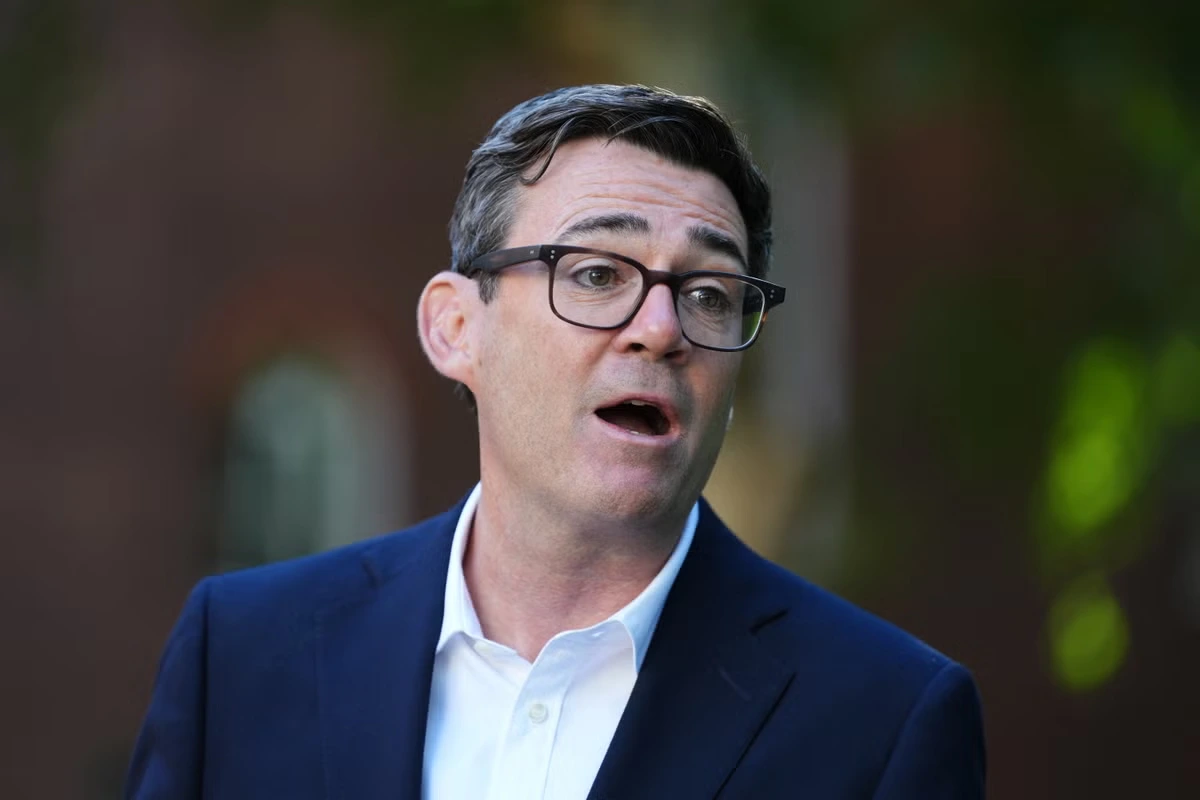
Ask any UK opposition party leader and they’ll tell you that they can see very few differences between Sir Keir Starmer and the man who replaced him.
From the economy to foreign policy, Andy Burnham has given very little away when it comes to his agenda for his time in office and, on many issues, has said he will continue work started by Sir Keir.
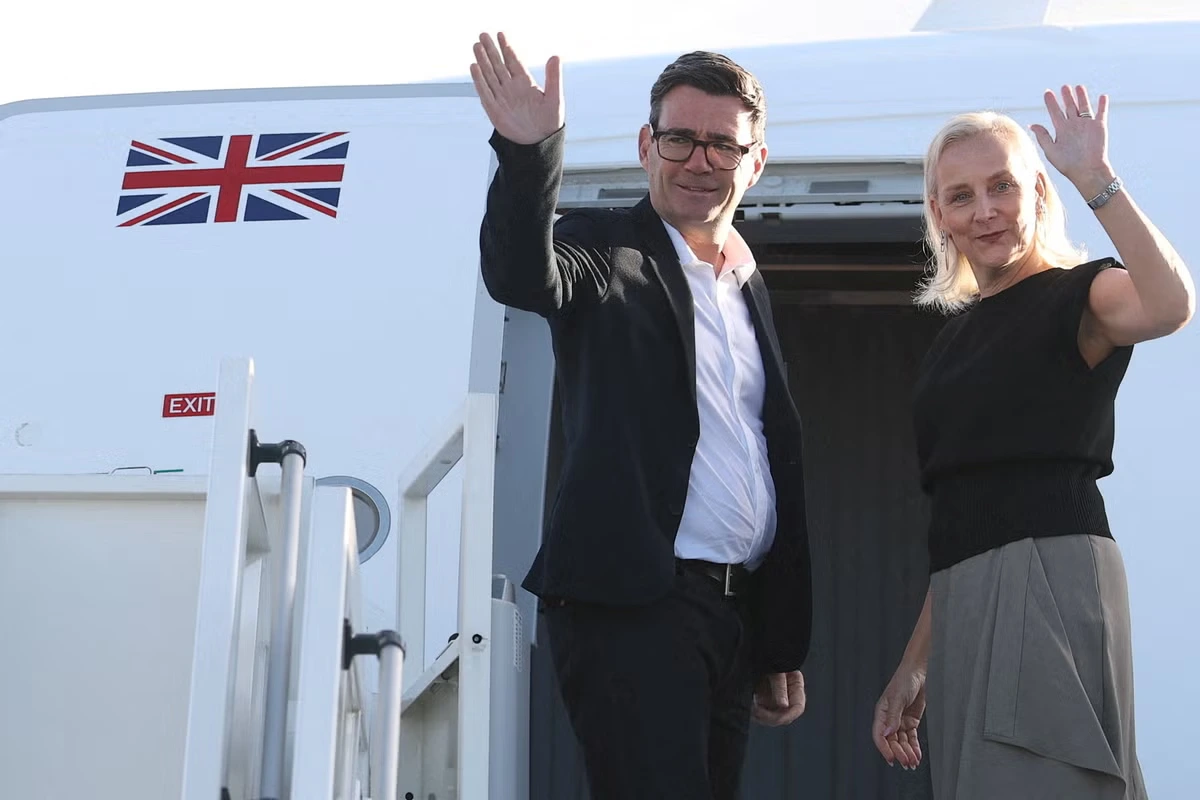
But as he took questions from journalists on his plane to New York, it took just a few minutes for Mr Burnham to offer up a key divergence from his predecessor when it comes to Britain’s relationship with Europe.
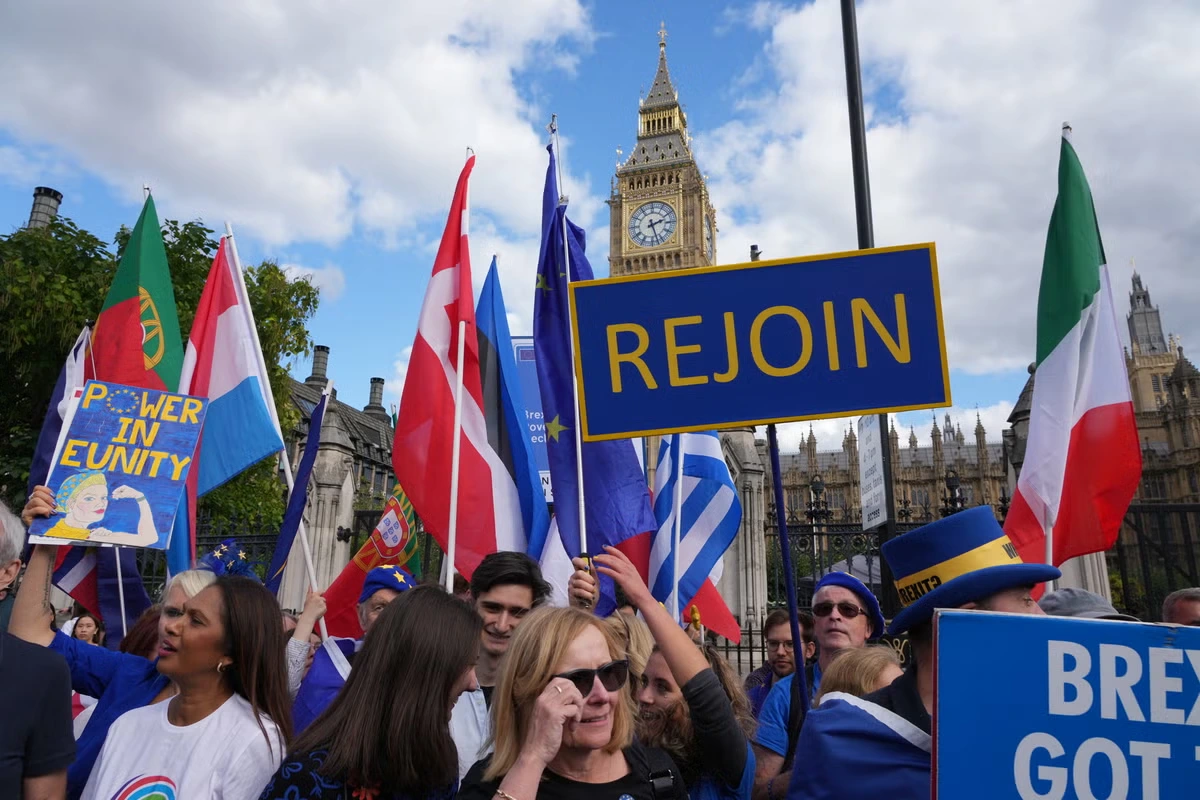
In response to a direct question from The Independent, he did not rule out putting a pledge to rejoin the EU in Labour’s next election manifesto – a stance very different to that of Starmer’s government.
He said he was focused on what could be achieved at an EU-UK summit expected later this year.
But when it came to the manifesto, that was, he said a “matter for another day”. He is not the first of his ministers to fail to rule out such a pledge.
In fact, his new Europe minister Hamish Falconer has declined to do so multiple times now. In doing so they have left the door open to the UK potentially rejoining the EU in the future – a door Sir Keir’s government had tried to firmly shut.
Mr Burnham was at pains to point out he was focused on other ways to improve relations with the EU.
The PM hopes a planned UK-EU summit later this year could allow him to strike deals that could offer an, albeit limited, boost to the British economy.
A long-awaited deal on youth mobility could also be on the cards.
But with some experts now suggesting that Brexit is costing between 6 to 8 per cent of GDP a year, he will know that is small beer.
Rejoining the EU, or at least some mechanism that would allow the UK back into the single market and the customs union, would offer Brits the kind of “breathing room” from cost of living pressures that Mr Burnham has pledged to deliver.
Times have also changed since the Brexit referendum – as have the electoral mathematics.
Support for rejoin is now at an all time high, leading polling expert Sir John Curtice recently told The Independent, at 61 per cent.
The older voters who supported Brexit are now fewer in number, while many new voters, too young to cast their ballot in 2016, now want their say – and polling shows they are overwhelmingly in favour of returning to the EU.
If Labour were to win an election with a pledge to rejoin in its manifesto then another, potentially divisive, referendum could, in theory, be unnecessary. Provided, that is, the win in the election was a strong enough mandate.
There is a scenario in which supporting rejoin would help Mr Burnham win the election – but he would have to fight for it. Sir John said that a future referendum could still be on a knife edge, and won or lost in how the argument was framed.
The same would surely apply to a general election. But politicians arguing in favour of re-entry would push the current figures even higher, Sir John said.
“Public opinion has shifted quite considerably, partly for demographic reasons, even though prior to 2024, apart from the Greens and the nationalists, nobody was arguing in favour of rejoining,” he said.
“So one can argue that the public has shifted despite the fact that they have been given very little indication from their political leaders that they should do so. And that, therefore, if you were to start to make the argument, if you come up with arguments that are anywhere halfway decent, then you should be able to move the dial somewhat further in your direction.”
For now, the door has been left ajar, suggesting the possibility that at some point the UK could attempt to rejoin the EU. Whether or not Mr Burnham goes through that door by the time of the next election remains to be seen.
Sign up for our free Europe: The Way Back newsletter here or by using the form below:
What you will get by joining:
There are even more benefits if you subscribe for just £1 for seven months: