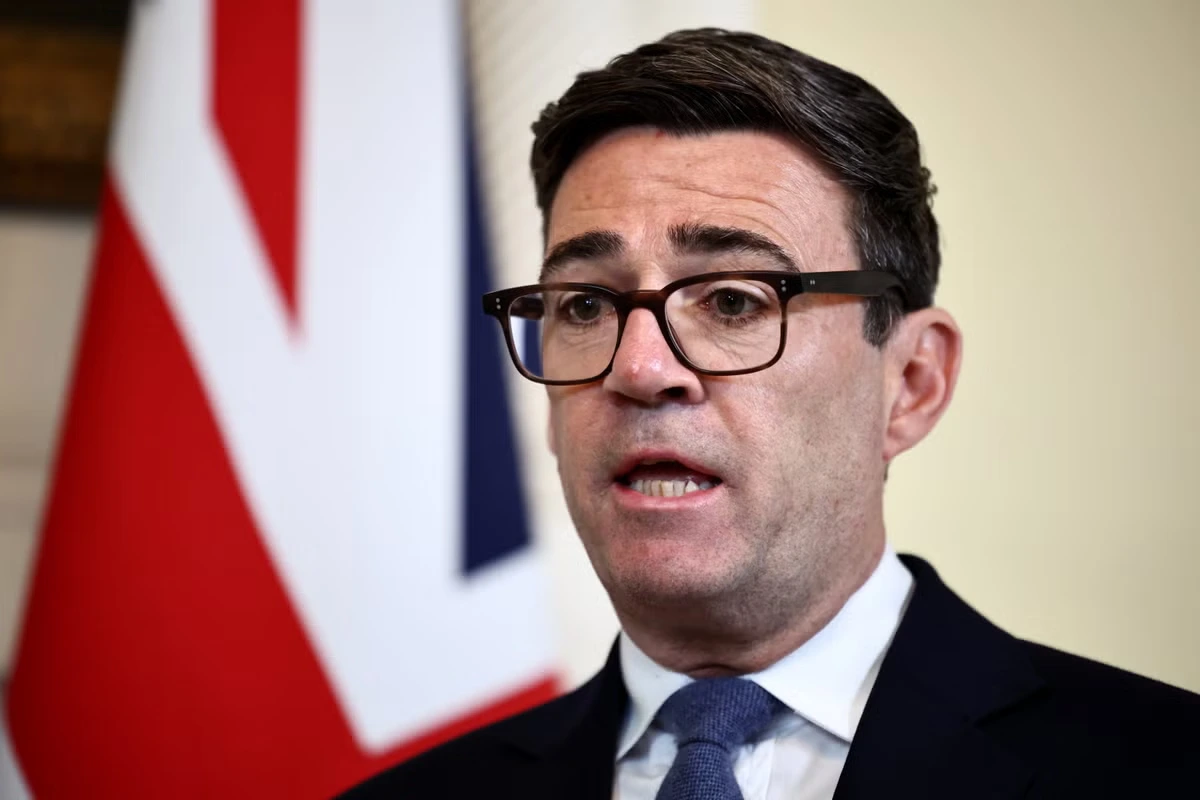
Andy Burnham has corrected the record and “apologised” after saying an “individual” was “responsible for the murder” of Ann Widdecombe.
The prime minister was accused by the Tories of a “breach of the presumption of innocence” after his comment during Prime Minister’s Questions.
Mr Burnham has now corrected Hansard, the official record of Government, but No 10 declined to comment on the matter on Wednesday evening.
A Downing Street spokeswoman said: “A correction has been issued to Hansard, and that will be published in due course.”
Asked if the Prime Minister understood the code, she said: “The fact that we have issued an update speaks for itself.”
Mr Burnham referred in the chamber to the “individual responsible for the murder” of Miss Widdecombe – a former Conservative minister and Reform UK’s justice spokeswoman – despite the legal process still being in its early stages.
Joshua Kerry, 28, was arrested on suspicion of murder on July 11, two days after Miss Widdecombe, 78, was found dead at her property in Haytor on Dartmoor, Devon.
A trial before a High Court judge is scheduled for June 8 next year, and a plea and case management hearing on January 29.
Kerry, of Byrley Road, Rotherham, South Yorkshire, has also been charged with a terror plot against Reform UK leader Nigel Farage.
On Thursday, Commons Leader Sir Alan Campbell told the House Mr Burnham had apologised for the error after the shadow Commons leader, Jesse Norman, accused the Prime Minister of being “deeply disrespectful” for having not done so.
Sir Alan said: “The Prime Minister has acknowledged that he misspoke…
“He said that he misspoke, he has apologised, and he has corrected the record.
“There isn’t an excuse for misspeaking in the House, and I’m not trying to explain that away, but this Prime Minister is characterised by an authenticity and a passion in the way that he responds.
“It’s not unusual either for prime ministers or for anybody else to speak in the House, as long as you correct the record, which he has done, then I think that should be put into perspective.”
Words spoken by MPs in the House of Commons are protected by parliamentary privilege.
The sub judice rule states MPs should not refer in debates, questions and motions to matters awaiting adjudication in a court of law.
This is to avoid influencing the outcome of those court proceedings, according to the Commons Library.
On Monday, Speaker Sir Lindsay Hoyle granted a “limited waiver” for MPs wanting to discuss the court case.
After Mr Burnham’s comment, the shadow Commons leader raised a point of order, telling MPs a man is innocent until proven guilty.
“The presumption of innocence goes back to Magna Carta. It applies without exception,” Mr Norman said.
“But the Prime Minister of the United Kingdom has just publicly spoken as though a man awaiting trial has already been convicted of murder.
“It’s directly contrary to the rule of law, it is a breach of the presumption of innocence, it is misleading to the House, and in any other forum it would be a contempt of court, which could be used to suggest the defendant had been prejudged on the merits of a case.
“The Prime Minister needs to apologise.”