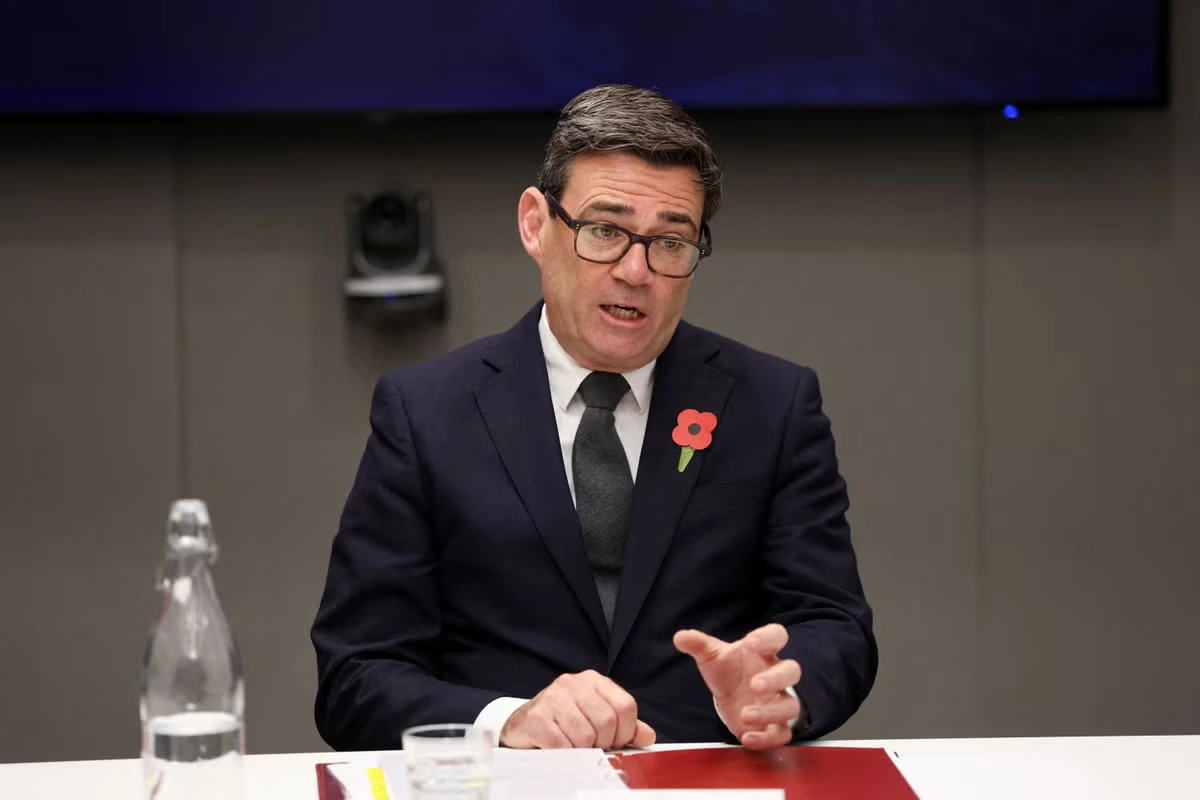
Andy Burnham has unveiled a £700 million package to help drive reindustrialisation in his latest push for devolution.
Mayors and local leaders are set to help the government identify 10 industrial and commercial sites across the UK in an effort to break down “barriers that hold back investment”.
The Strategic Sites Accelerator will deploy £700 million, alongside expert support including planning, grid connections and access to finance.
The programme aims to attract up to £2 billion in private investment, which according to the government could help to support tens of thousands of jobs over time.
Chancellor John Healey said the scheme will help “break down barriers to local growth”.
“Local leaders know their communities best. Only by trusting them with real power and resources will we see change,” he said.
“This £700 million package is helping break down the barriers to local growth, so people can feel the benefits of a growing economy and love where they live.”
The programme is set to focus on commercially viable sites with strong investor demand, and is already engaging on potential sites in Glasgow, Burgess Hill and Sheffield.
The sites will benefit from access to finance, grid connections, and planning constraints, which would remove the blockers for would-be investors.
Investment opportunities will also be explored in areas such as Greater Manchester, West Yorkshire, West Midlands, South Yorkshire, Liverpool City Region, the North East, Glasgow City Region and Cardiff Capital Region.
No10 North will work alongside the programme and local leaders to support the government’s wider drive to identify investment opportunities across the country, with the programme being open to sites across the UK to support sectors such as advanced manufacturing, digital and tech, defence, and life sciences.
Business secretary Jonathan Reynolds said the programme will “get the ball rolling for up to 10 of the UK’s most important potential sites”, helping achieve the government’s promise of “good growth in every postcode”.
“Britain’s potential is everywhere, but we hear the same old arguments all too often – outdated infrastructure, insufficient access to finance, and problems with planning,” he said.
“These are barriers that hold back investment, block new jobs, and shackle our potential, and we need to do more to empower our local leaders and help drive the growth their communities deserve and expect.
“This programme will get the ball rolling for up to 10 of the UK’s most important potential sites, attract billions in investment, unlock tens of thousands of good-quality jobs in the years ahead, and bring good growth to every postcode.”
It marks the prime minister’s latest step in his devolution drive, as ten new devolution agreements are in their final stages.
These will establish new mayoral authorities in: Devon, Plymouth and Torbay; Hertfordshire; Lancashire; Leicester, Leicestershire and Rutland; Stoke and Staffordshire; Surrey; Thames Valley; and Wessex.
Kent and Medway, and Cornwall will set up slightly different devolution models under the proposals.
Delivering the Budget, chancellor John Healey said this would mean: “New powers to the people who know their areas best, not sentimentality but supply-side economics. The biggest wave of devolution in a generation, driving good growth in every postcode delivered to the British people by this Labour government.”
Central to the changes is the plan to give most mayoralties a share of income tax generated in their regions.
From April 2028, authorities with directly elected mayors will receive a uniform rate of local basic-rate income tax. Mayors will not set tax rates or bands, but will retain the revenue to fund local infrastructure, transport, and housing.