Andy Burnham’s first days in Downing Street have moved fast – and left Independent readers with plenty of questions.
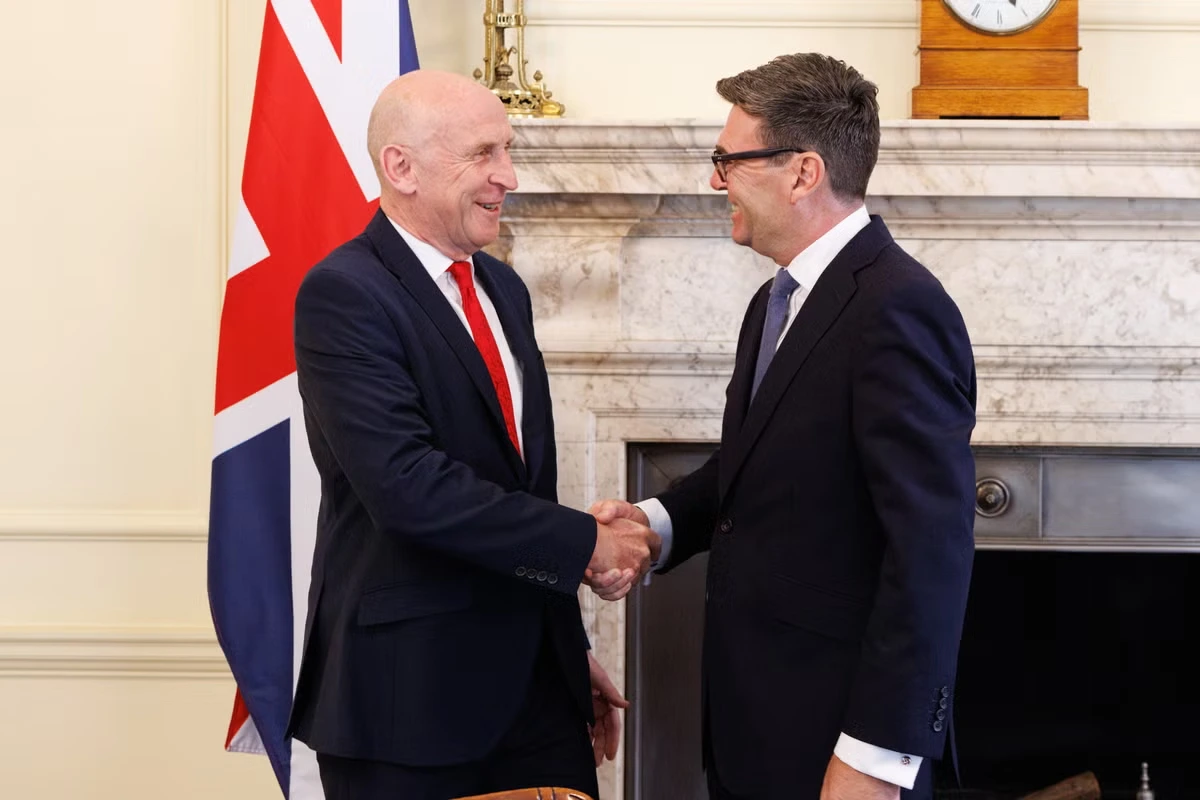
The new prime minister axed Rachel Reeves as chancellor within hours of arriving in No 10, then wrongfooted Westminster further by passing over both the left’s preferred pick, Ed Miliband, and Sir Keir Starmer’s favourite, Shabana Mahmood, in favour of John Healey – a former defence secretary who resigned from Starmer’s cabinet in a row over a £13bn shortfall in defence spending.
Miliband moves to the Foreign Office and Mahmood stays at the Home Office, leaving Healey to carry the economic weight of this government.
Across a recent Ask Me Anything session, most of what readers wanted to know was economic: whether Burnham can actually afford his own ambitions, how he pays for the £38bn tax pledge and the rough sleeping commitment, and whether his new chancellor changes the calculation.
A handful also probed whether his “King of the North” branding is smart politics or a liability.
Much of the discussion centred on a simple but unresolved question – whether Burnham’s arrival in No 10 signals a genuine break with the fiscal caution of the Starmer years, or whether he is simply making bold promises he won’t be able to keep.
The bond markets, not Westminster, will have the final say.
Here are some of your questions from the Q&A – and my answers:
Anonymous
A: Yes, he had no choice. She was bound at the hip with Keir Starmer, they were very much a double act. If he wished to show Burnhamism is to be different he could not keep her. Also, Rachel Reeves had made herself unpopular among the business community. They could not forgive her for unexpectedly raising employers’ national insurance, she had lost their trust. If Burnham is to have any hope of succeeding he must win over businesses and investors. He could not do that with Reeves still at Number 11.
Anonymous
A: Very little. However, I would argue that it was not just the bare Treasury shelves that broke Starmer’s progress but also the nature of Starmer himself. He was cautious by nature and resisted taking decisions. Burnham is declaring himself to be bolder and while that may galvanise the Whitehall machine, it creates its own problem, of promising much and delivering little. We shall see.
Peter Salt
A: Fragile. There is so much we must spend public money on, such as improving the infrastructure, yet we have to keep spending ever greater amounts just to stand still, or worse, to slip slightly backwards. The welfare and health budgets keep on growing. Somehow, we must get a grip but no PM, Labour or Tory, is willing to tackle that elephant in the room. So we go on, with little changing and the shopping list lengthening. Worryingly, we struggle to cope with shocks – investment in defence being the latest example.
We can borrow more but we must be wary of having to pay more in interest – our borrowing costs are already high. We can tax more but that will suppress what little growth there is. If these were my household finances, the bank manager would be asking to see me and/or I would not be sleeping at night. The new PM must tread a very fine line, yet he is also expected to make bold strokes, and he has said he will. Where the money is going to come from is a mystery...
Laertes
A: It’s the gap between what he has in the kitty and what he is already committed to spending. It’s another way of saying leeway or wriggle-room. There are differing views as to how great it is. If he spends freely and pledges big ticket policy changes, without it being obvious how he will fund them, then the markets will react. That is exactly what Liz Truss did and look what happened to her.
DonQuixote
A: He’s indicated that council housing will be a major concern. That’s all very well but councils have no spare money. That would suggest therefore he is going to earmark central government funds, so that will be one area. Likewise, he is promising to tackle youth unemployment, which must mean apprenticeship schemes and teaching new skills, again requiring money. Social care is another topic being repeatedly mentioned, and looking at how places in care homes are paid for. These will require funding. If he is to raise £38bn, the widely mooted figure, he will find it goes extremely quickly.
Bianca
A: Yes, the gap between rich and poor is growing, but Andy Burnham must balance those who create the wealth in the economy, the drivers of business, with turning them away. We live in a globally competitive era, where other countries are seeking entrepreneurs and investors. He therefore needs to be careful. It looks as though he may have identified a property tax as one possibility, and that will certainly be seen as less damaging than others.
MichaelBowden
A: Good question! His pledge outside No 10 was certainly unexpected and eye-catching, also odd, given all the other issues he must contend with. That's not to say rough sleeping isn't important – of course it is. But it is also extremely hard to solve and is bound up in all manner of related subjects, such as mental illness, lack of social care and welfare, how the military treats its veterans, treatment of addiction, cost of housing, rehabilitation of ex-prisoners – the list of causes of homelessness is long. He failed to do it in Manchester, although he has had some impact. Intriguingly, he made it a Day One priority there as well. He may discover as well that solving a national crisis is very different from attempting to combat a regional one.
Anonymous
A: The Defence Investment Plan has been costed and can be paid for. The trouble Burnham has, going forward, is whether it is enough. Critics say it isn't and in this one area in particular, history tells us that something can occur unexpectedly, we must respond and then the money drains away. What would happen, for instance, if the Falklands became an issue again, would we have the naval fleet to protect what we believe to be ours? What if Russia stepped up its posturing against Nato and did something concrete, what then? Donald Trump's America has made it plain Nato cannot expect any extra.
MichaelBowden
A: It's a dangerous game to play. Every time an extra pound is spent in the North, a pound isn't spent in the South – such is the delicate balance in the British economy. Southerners will quickly grow sick of the Northern drum being thumped, if they are not already. He should understand that 16m people live in the north of England as opposed to 32m in the south, and that London is the biggest economic driver. He plays with that at his peril. Since becoming leader there are signs he is taking that lesson to heart, talking about launching a nationwide listening tour.
KPinLondon
A: We do appear to have got ourselves into seeing everything short-term, in not giving anyone any time. At the same time, it takes longer and longer to get anything done in this country, thanks to complicated laws and red tape (something no PM has resolved, despite promising they will). That makes progress in a short time difficult. It's the system that needs changing, as much as bringing in new policies. He must pay attention to both, or he will be ground down.
These questions and answers were part of an ‘Ask Me Anything’ hosted by Chris Blackhurst as Andy Burnham became prime minister.
Some of the questions and answers have been edited for this article.