It all began on a Dutch trading ship in 1628. No, really. When the Batavia set sail from Amsterdam, it crashed and the shipwrecked survivors were left stranded on a tiny island off the coast of Western Australia. As mutineers eyed the Batavia’s stash of silver, shipmates, friends and families turned on each other. About 100 people were brutally murdered, making it one of the most violent chapters in maritime history.
Nearly 400 years later, in 2015, creative entrepreneur Marc Pos had a lightbulb moment while reading about this “adult Lord of the Flies” atrocity. It gave him the idea for a reality TV show – the game of trust and treachery we now know as The Traitors. It was originally envisaged to take place on a boat, with banished players jumping overboard into the sea.
Co-creator Jasper Hoogendoorn joined Pos to develop the idea, The Mutineers. After 20 rejections, they fine-tuned the game further. Filming it on a boat was too limiting, so they shifted the action on to dry land – and looked for more aesthetic inspiration. Pos was once a choirboy in a 14th-century cathedral, gazing up at its spooky gothic architecture. This became the template for the show’s setting: cue cloak-clad figures walking silently down torch-lit corridors to a secret tower. The Traitors was finally born in 2021, now known as De Verraders.
UK production company Studio Lambert – maker of superior reality TV from Gogglebox to Race Across the World – soon clocked this new Dutch show. “We watched it in the office and couldn’t stop talking about it,” says creative director Mike Cotton. “Reality TV goes in cycles. At the time, it was in a phase of dating shows. This felt totally different. It wasn’t about love, it was about trust.” He and executive producer Sarah Fay visited the Netherlands to witness the phenomenon first-hand. “We went straight to the set,” says Cotton. “All these people in a castle were discussing how someone had been murdered and taking it very seriously. Even unedited, it was fascinating to watch.”
Snapping up the UK and US rights, Studio Lambert began adapting it. “The Dutch version was smaller, so we supersized it,” says Cotton. “We tweaked the format. Changed the endgame. We decided to film the British and American shows at the same castle in the Scottish Highlands.” Each episode is estimated to cost £1m, almost double a normal reality show, enabling it to splash out on cinematic flourishes such as exploding pirate ships and creepy cabins.
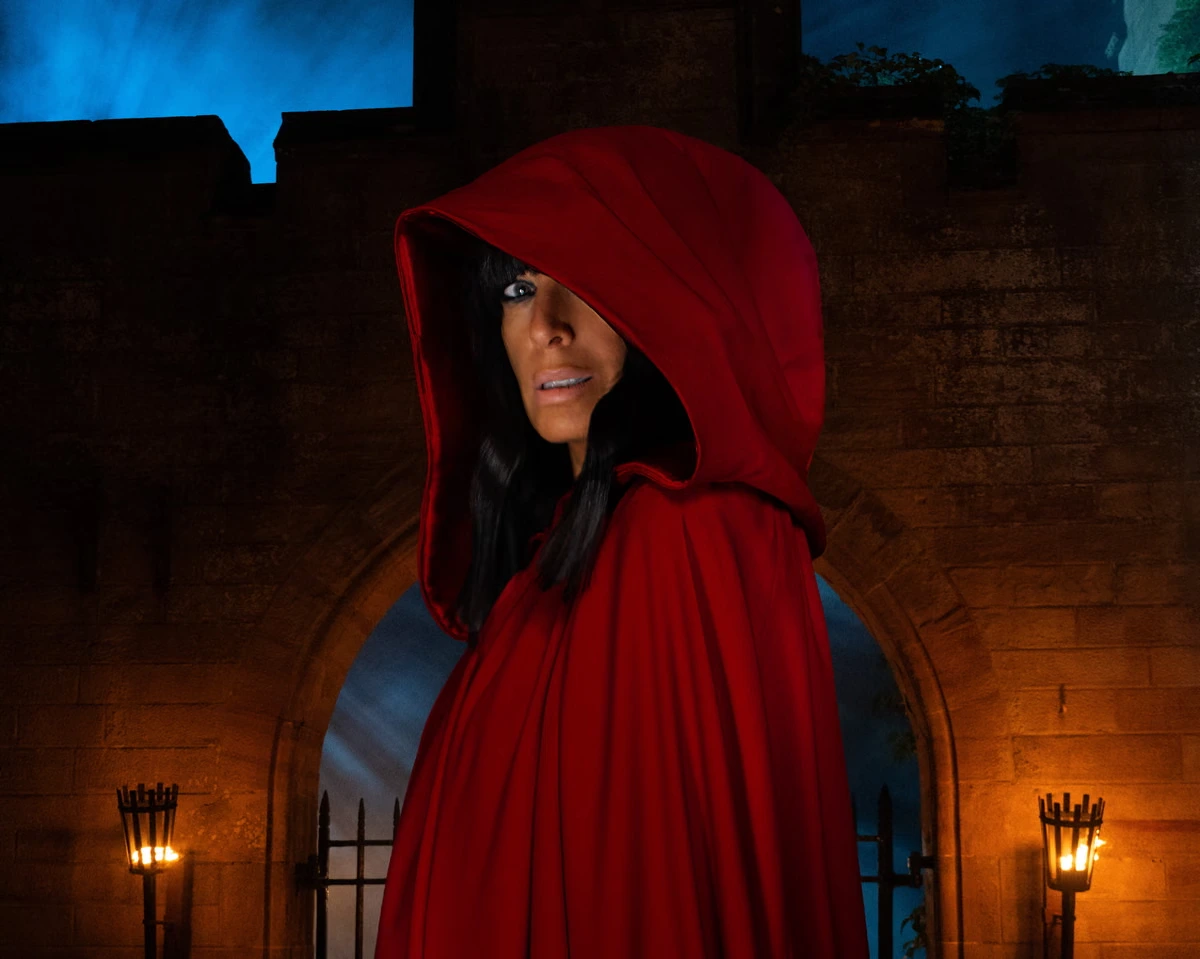
Now all it needed was a worthy host. Enter Claudia Winkleman, clad in covetable knitwear. “[BBC One controller] Kate Phillips said she had a show for me,” recalls Winkleman. “It was in Scotland for four weeks. But I don’t leave the kids or my bed, so I said no thanks and forgot all about it. Then Kate said: ‘You should rethink. I’m going to send you the original series they made in Holland.’ I watched two episodes and called back to say I was booking my train to Inverness.”
“Once we had Ardross Castle and Claudia, everything fell into place,” says Cotton. “The UK version quickly became its own thing.” Launching in 2022, it pulled in ratings of about 4 million. As buzz spread and punters caught up on iPlayer, audience figures grew exponentially. The second series leapt to 7 million, the third to 9 million, the fourth to 11.5 million. The inaugural celebrity edition last autumn peaked at 14.9 million, making it the year’s most-watched show.
Did Winkleman ever imagine such stratospheric numbers? “Not a chance,” she laughs. “But I don’t like knowing about ratings. My BBC boss Ed [Havard, director of entertainment] called me a couple of weeks ago to say ‘10 million’. I told him it was a clerical error and never to call me again.”
Fay believes Winkleman is key to the show’s success. “As much as possible, we wanted The Traitors to feel like a drama,” she says. “That was our approach in every department, be it set design, music or Claudia’s wardrobe. It needed to feel like a premium show. Claudia’s integral to that. It’s not your usual reality host role, where they’re slightly removed from the action. She’s embedded as queen of the castle and obsessed with the game. Right from the start, she begged to have screens in her dressing room so she could watch the footage.”
Ever modest, Winkleman plays down her importance. “I disagree with that quite viciously,” she says. “At first, I couldn’t bear being mean or cold. I loathed not smiling and telling everyone they were amazing. But under Sarah’s guidance, I learned to trust that I could be a bit strict. It’s hard because I feel protective and maternal – is that weird? – towards all our players. I want them to know they’re smashing it. Then again, I’m dressed like Chewbacca and throwing portraits on the floor, so I’m hard to take seriously.”
Now airing in more than 40 countries, The Traitors has officially become the most successful TV show on the planet. It has won Baftas and Emmys, while spawning board games, stage shows, escape rooms, even a Prom. Did TV insiders expect the show to strike global gold?
“Nobody saw it coming,” says Deadline’s TV expert Jake Kanter. “Viewing figures growing steadily is always a good sign because it means word of mouth is strong. The best definition of a hit is that you don’t need to tell anyone how well it’s performing, they just know. Your friends, family and colleagues are talking about it.”
When Pos and Hoogendoorn shopped the show around, they resisted pressure to compromise and dug their heels in over certain core principles. One was that gameplay should take place in a self-contained bubble with minimal interference.
“The Dutch always talked about it as a game, not a TV show,” says Cotton. “This is the game, these are the rules. After that, they’re very hands-off. That’s something we’ve adopted. We set up the game and just let it go. That’s rare nowadays. We never want producers to come up at the round table or be the reason someone’s suspected as a Traitor. If you interfere, they’ll latch on to it. We plan certain elements but have no way of controlling what happens.”
Another cardinal rule was that the identity of the Traitors isn’t hidden from the audience. Wouldn’t it be better if viewers played detective, too? “We did dabble with the audience not knowing with the Secret Traitor twist in series four,” says Fay. “But what’s delicious for the viewer is that they’re in on it all. They see the strategies and paranoia on both sides. Imagine if you didn’t know Alan Carr was a Traitor last year. You’d have missed out on the hilarity of him sweating, panicking and going: ‘What am I doing?’”
Winkleman finds the psychology of the game endlessly fascinating. “It’s about gut instinct,” she says. “Turns out it doesn’t exist. It’s about what happens when we try and ‘read’ people. It’s about trust, betrayal, friendship, all of it.” It’s no coincidence that The Traitors was conceived during the era of fake news and social media manipulation. In a post-truth world, it offers insights into conspiracy theories, herd mentality and groupthink.
“What still wows me is that every series is completely different,” says Fay. “That’s the beauty of a murder mystery. We’re just back from filming the seventh UK series and, again, there are things coming up that you’ve never seen before.”
When did the makers realise they had a smash hit on their hands? “For me, it was episode four of the first series,” says Fay. “The Red Breakfast, when Tom stood up and went: ‘Alex isn’t a Traitor, she’s my girlfriend!’ We were watching the rushes with our mouths wide open.”
“It’s rare to find a format that’s multi-generational,” says Fay. “Remember when we walked down the street and pubs were showing the series one final on big screens, like a football match?” grins Cotton. “That blew our minds.”
What have been Winkleman’s highlights? “There are so many I could bore you for 18 months straight. I often have to stop myself gasping out loud at the round table. When the Faithful catch a Traitor, it’s electric. If Traitors turn on Traitors, I always think my head is going to fall off. And I still get a total buzz from going into the turret. It feels very special to be allowed in there.”
For its award-garlanded host, The Traitors has been transformative. “It’s the greatest job I’ve ever been given,” says Winkleman. “It has changed my life and my career, no question. I’ll be there with Barry the owl long after they’ve fired me. I’ve also told the peacock to make room in the shed where he roosts.”
The Traitors has overtaken Strictly Come Dancing as the BBC’s crown jewel but it’s a mutually beneficial relationship. From Celia Imrie’s guff to Richard E Grant’s gaffe, from Ross Kemp’s twitching paranoia to James Acaster’s trembling terror, the franchise thrives on communal talking points. It wouldn’t work nearly as well being binged on a streamer. “The Traitors demonstrates the power of television to bring people together,” says Kanter. “At a time when there’s lots of existential hand-wringing about the health of the broadcast industry – and the BBC particularly – it’s a reminder that when terrestrial TV is good, it’s something to treasure.”
The chaotic second celebrity series reaches its climax this week, with 17 million expected to tune in. What can they reveal about Friday’s final? Fay laughs. “I’m trying to work out what we can tell you without ruining anything.” “It’s stressful and unpredictable,” says Cotton. “Genuinely surprising, even for us,” adds Fay. “With real heart-in-mouth moments.”
“I always cry at the endgame, regardless of who wins,” concludes Winkleman. “Whoever is left standing has played the best game. I feel incredibly proud of them. This series is no different. It feels momentous.”
The Celebrity Traitors climaxes at 8pm on Thursday 29 October and Friday 30 October on BBC One and iPlayer.