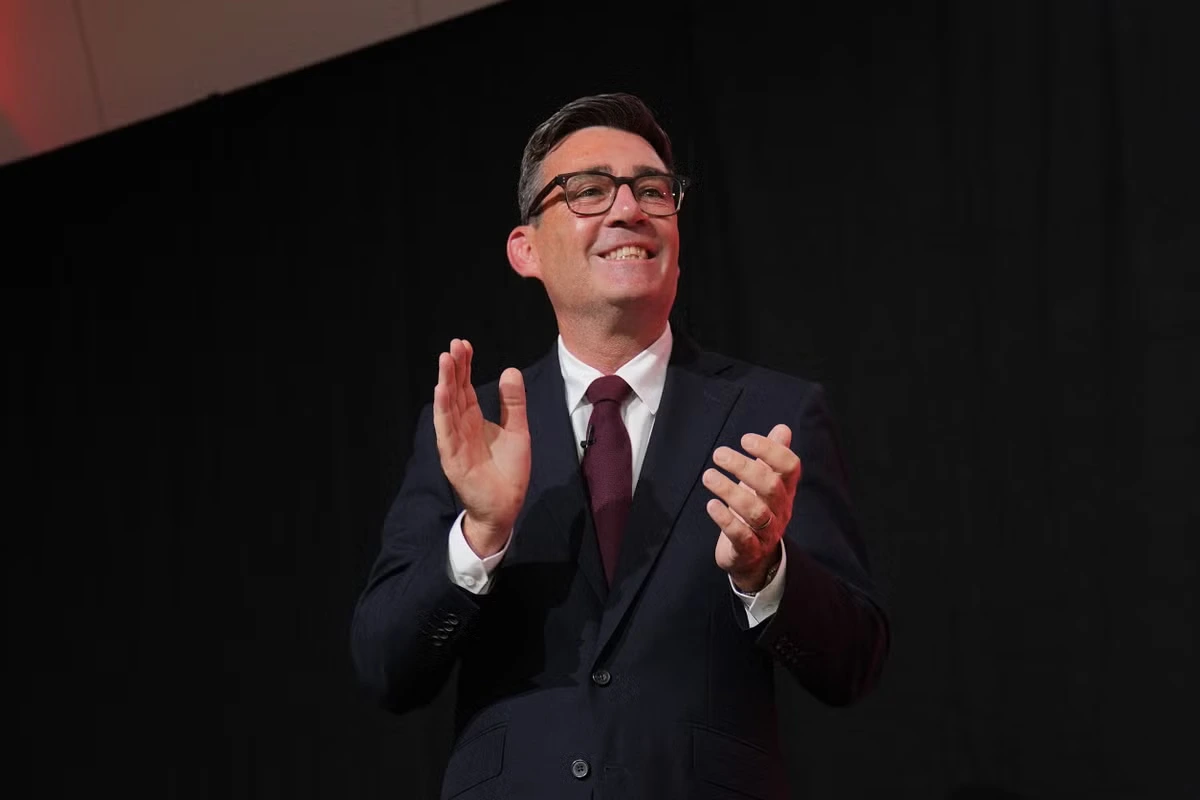
Andy Burnham inherits a Foreign, Commonwealth and Development Office (FCDO) struggling to adapt to years of aid cuts and repeated restructuring as prime minister, with experts warning his new government must urgently set out a long-term strategy for the UK’s role in the world.
The incoming prime minister and his new foreign secretary face immediate decisions over how to deliver foreign policy and development ambitions after spending cuts and years of upheaval have left the department overstretched and without clear priorities.
In a major shake up, it is thought that energy secretary Ed Miliband could replace Yvette Cooper as foreign secretary, with permission to prioritise climate goals and with a roadmap to return the UK to spending 0.7 per cent of Gross National Income (GNI) on international aid, The Independent revealed over the weekend.
If it does not set out a clear vision, experts say, the government will be stuck trying to maintain global ambitions with fewer resources, weaker institutional capacity and diminished influence overseas.
“The UK’s credibility has been hurt by abrupt aid cuts that often hit health programmes hardest – especially in Africa, where the UK had been a long‑standing anchor on HIV, sexual and reproductive health and rights, primary care systems and humanitarian response,” says Roli Asthana, an associate fellow at the Chatham House think tank.
“We need to move from salami‑slicing health budgets to making deliberate choices,” she adds.
Outgoing Labour PM Sir Keir Starmer and chancellor Rachel Reeves downgraded international development money to just 0.3 per cent of GNI to help pay for the rising defence budget. It followed previous cuts under the Conservatives.
The budget drop, combined with global cuts from Donald Trump in the US and Europe, have left some of the world’s most vulnerable countries struggling to respond to crises. The shortfall has been linked to the scale of the current Ebola outbreak in the Democratic Republic of the Congo, the third largest in history, rising hunger and increased conflict.
It was revealed last week that nine African countries are set to see their UK bilateral aid cut by more than 80 per cent, with the government laying out the full breakdown of its plan to reduce the aid budget through to 2029.
The documentary, Hunted: Kidnapped, blackmailed and tortured for being LGBTQ+, by The Independent’s chief international correspondent Bel Trew, lays bare the realities faced by LGBTQ+ people in Nigeria as HIV services come under increasing pressure due to funding cuts.
The immediate priority for the new cabinet should be stabilisation, according to Chatham House’s Asthana.
“Clarity of purpose, predictable budgets, and a reset of relationships with governments and institutions based on a clear vision and prioritisation framework," she says.
A “reduced envelope” can still achieve meaningful outcomes, she said, but only if resources are concentrated in places where it can genuinely shift the dial: “fragile states, essential health systems, and a small number of strategic economic partnerships that build on UK strengths”.
Gideon Rabinowitz, Director of Policy and Advocacy at Bond, a network for organisations working in international development, says the new government has the opportunity to restore the UK’s standing as a reliable partner globally.
“The next prime minister and foreign secretary should recognise the role of international development in protecting the UK’s credibility abroad, and building a safer, equal and more stable world,” he said.
Bond has called on Burnham to rule out further cuts to the aid budget and honour Labour’s manifesto pledge to restore spending towards 0.7 per cent of GNI when fiscal conditions allow.
It also urged the new government to put poverty reduction and humanitarian assistance back at the heart of development policy and maintain the minister for development’s place at the Cabinet table.
There needs to be a fundamental shift in the UK’s approach to conflicts including Gaza, Sudan and Yemen, according to Bond, urging the prioritisation of accountability, humanitarian access and an end to arms transfers to parties involved in those wars.
Burnham has vowed his party will “do better” under his leadership as he seeks to win back voters who abandoned it over its position on Israel’s war inside Gaza.
The Foreign Office is also in the middle of a major internal restructuring, with officials reapplying for roles as the department reshapes its workforce following years of organisational change.
While adapting to aid cuts and a major restructuring at the Foreign Office are different tasks, the two have become intertwined without a clear long-term strategy to guide them, according to Hannah Keenen of the Institute for Government.
Ministers need to decide what the UK should prioritise internationally and then align the department’s structure and expertise with those choices, she says. Where the Foreign Office leans in and where it steps back needs to be defined, she adds.
She argues the government had yet to set out how it would match its global ambitions to the aid budget available. She says: "Once you’ve taken the decision to cut the aid budget, you then need to say: here’s how we’re going to spend it most effectively”.
This story has been produced as part of The Independent’s Rethinking Global Aid project