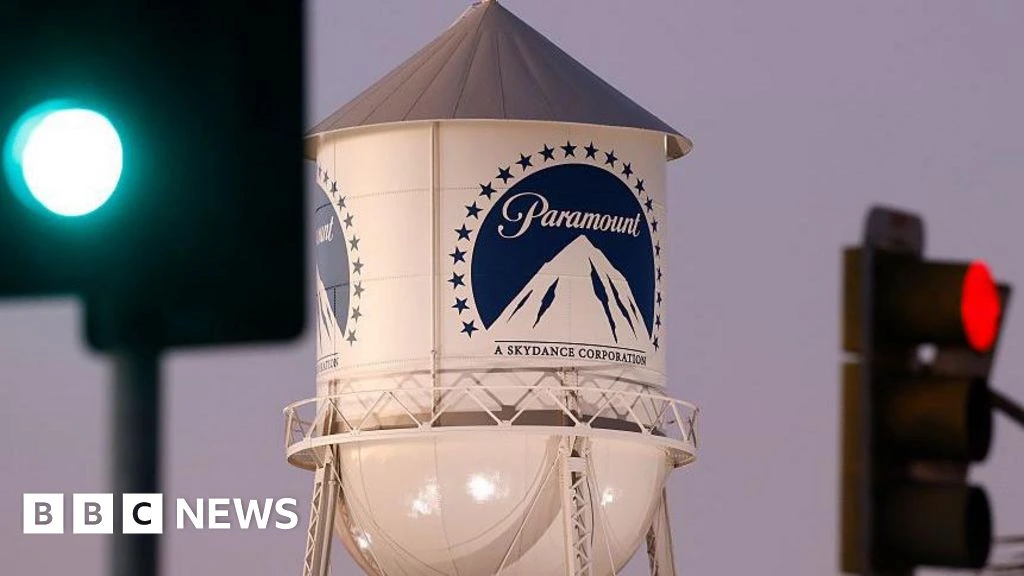
Paramount Skydance and Warner Bros Discovery have agreed to pause their $110bn (£82.8bn) merger until June 2027 while a judge weighs upon a legal challenge against the tie-up.
Paramount Skydance and Warner Bros Discovery have agreed to pause their $110bn (£82.8bn) merger until June 2027 while a judge weighs upon a legal challenge against the tie-up.
The pause follows lawsuits from 12 US states and the Writers Guild of America (WGA), who argue the deal would harm competition and lead to higher prices for consumers.
The pause follows lawsuits from 12 US states and the Writers Guild of America (WGA), who argue the deal would harm competition and lead to higher prices for consumers.
lawsuits from 12 US statesThe decision comes just days after European regulators approved the deal, on the condition Paramount would end a major film distribution partnership with Universal Pictures in the region.
The decision comes just days after European regulators approved the deal, on the condition Paramount would end a major film distribution partnership with Universal Pictures in the region.
European regulators approved the dealWith the deal on hold in the US, emergency court hearings have now been cancelled.
With the deal on hold in the US, emergency court hearings have now been cancelled.
deal on hold in the USDespite the court freeze, Paramount and Warner Bros insist that combining their operations is essential to compete with digital streaming giants and tech conglomerates.
Despite the court freeze, Paramount and Warner Bros insist that combining their operations is essential to compete with digital streaming giants and tech conglomerates.
Paramount hailed the agreement as a "significant win", stating it provides a "direct path to a trial based on the evidence".
Paramount hailed the agreement as a "significant win", stating it provides a "direct path to a trial based on the evidence".
The company added that a trial is the "fastest" way to prove the merger is "good" for competition, consumers, and creators. The US Department of Justice approved the deal in June.
The company added that a trial is the "fastest" way to prove the merger is "good" for competition, consumers, and creators. The US Department of Justice approved the deal in June.
US Department of Justice approved the dealBut state officials and Hollywood unions argue that merging two major studios gives one company too much control.
But state officials and Hollywood unions argue that merging two major studios gives one company too much control.
They argue the move would reduce bargaining power for writers and crews, shrink project options, and ultimately limit choices for viewers.
They argue the move would reduce bargaining power for writers and crews, shrink project options, and ultimately limit choices for viewers.
WGA head Tom Fontana previously warned it would suppress wages and eliminate opportunities for up-and-coming writers.
WGA head Tom Fontana previously warned it would suppress wages and eliminate opportunities for up-and-coming writers.
"It remains our view that this merger is unlawful, and we will continue the fight to block it," the Block the Merger Coalition said in a statement on 24 July.
"It remains our view that this merger is unlawful, and we will continue the fight to block it," the Block the Merger Coalition said in a statement on 24 July.
Paramount insists viewers will benefit, vowing to release 30 films in cinemas every year – doubling its current turnout.
Paramount insists viewers will benefit, vowing to release 30 films in cinemas every year – doubling its current turnout.
With preliminary court battles now bypassed, legal teams for both sides must submit a proposed trial schedule by 31 July.
With preliminary court battles now bypassed, legal teams for both sides must submit a proposed trial schedule by 31 July.
Until a judge reaches a final verdict – or until 1 June 2027 – Paramount and Warner Bros will remain completely separate, competing operations.
Until a judge reaches a final verdict – or until 1 June 2027 – Paramount and Warner Bros will remain completely separate, competing operations.