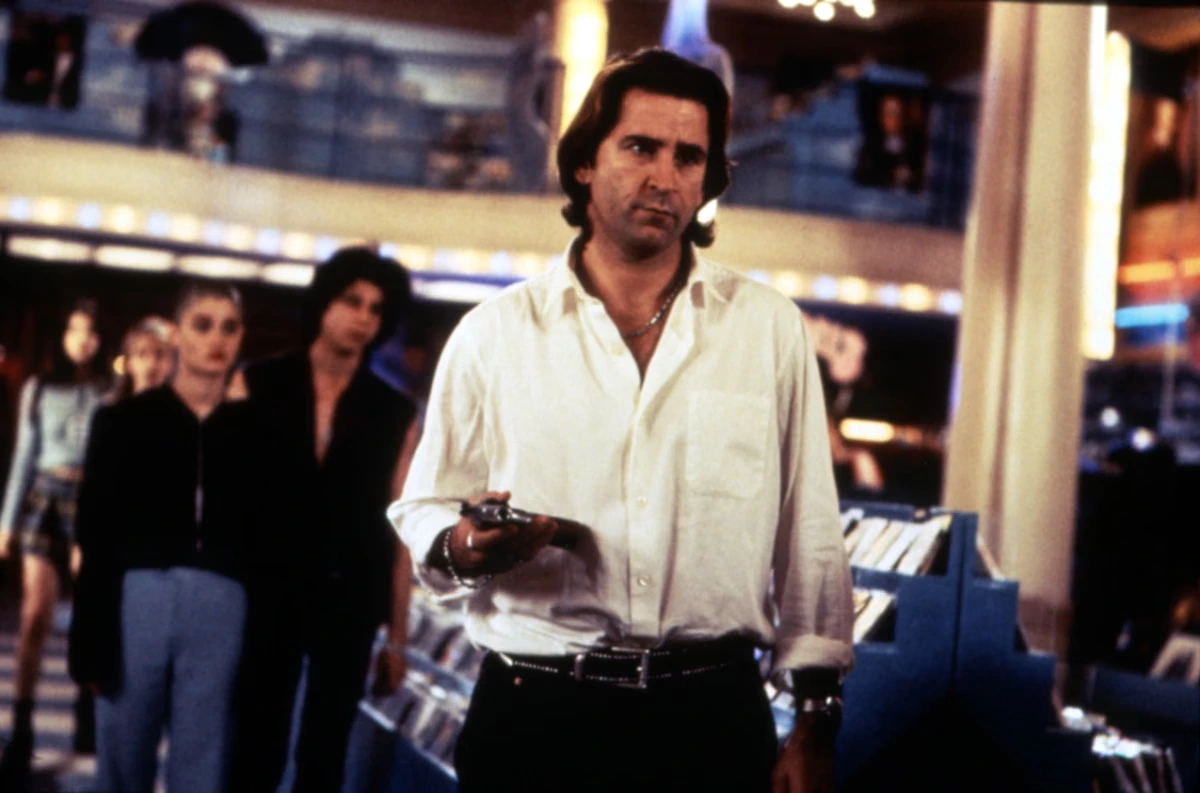
Maybe once a year we get a celebrity memoir that is as good on the juicy stuff – the Hollywood gossip – as the interior excavation; and boy does Anthony LaPaglia deliver both in his new memoir, The Life We Choose. “They say acting is the cheapest form of therapy,” writes the actor, best known for his roles in Without a Trace, Empire Records, Lantana and Frasier. “And that was lucky for me, because, coming up in the way I did, Christ knows I needed it.”
The memoir reveals a lot about his abusive childhood in Adelaide, at the hands of his father, Egidio; and how he went from working as a shoe salesman to moving to the US, to work on Broadway and in Hollywood.
But if you’re after name-drops, there are plenty. LaPaglia is a big fan of: Kiefer Sutherland (who he claims was once trailed by a “70-year-old ex-bov from London named Moe” whose sole job was to make sure Sutherland turned up on set when he was “shitfaced”); Arthur Miller; Allison Janney; Michael Keaton; Stanley Tucci; Mike Myers; the whole cast of Frasier but particularly Kelsey Grammer; Alan Arkin; Kerry Armstrong (“a genius actress and a complete nutcase”); and Hugo Weaving.
LaPaglia has mixed feelings about: Val Kilmer (who he claims once deliberately poured coffee on him); John Landis (“aggressive and condescending”); the Empire Records director, Allan Moyle (the only time LaPaglia walked off a set); his youngest brother, Jonathan LaPaglia (“extremely boring company”); Harvey Weinstein (fair); and his third ex-wife, Alexandra Henkel (whom he won’t even name).
Here are seven takeaways:
1. He really does not like Adelaide
LaPaglia had a tough childhood in the suburb Beefacres (now part of Windsor Gardens) in South Australia. He’s still not a fan of his home town: “There’s a bad energy running through it. Whenever I go back, I feel the same low-frequency unease that used to spook me as a kid … Maybe it was weird for a kid, but even during my school years I worried that if I didn’t one day leave Adelaide, I might never be happy.” Though he credits his childhood for helping him become an actor: “I estimate about 80% of the actors I know sprang from difficult beginnings and had poor relationships with their families … I believe nothing makes an actor better than the deep sense of anger and revenge that often accompanies suffering.”
2. He loved cocaine
It wasn’t until 1993, when he was filming So I Married an Axe Murderer in San Francisco, that LaPaglia tried drugs for the first time in his 30s – and really liked them. The memoir includes some incredible lines, including: “Cocaine is the Gollum of drugs. You can go along on it for a while but there is a point where it just grabs you” and “I could buy a sandwich bag half-full of the stuff without putting a dent in my rent or grocery bill”. But he became a “bingeing addict” and went on “a four-day solo bender watching David Attenborough’s greatest hits”. One time, his kitchen drawer started talking to him.
LaPaglia never went to rehab but eventually shook his addiction because he “couldn’t live with the stupidity”. He has dyscalculia and always struggled with numbers, “but for years after I quit drugs, I could remember my dealer’s phone number by heart”.
3. He almost played Tony Soprano
In 1996, David Chase approached LaPaglia with the pilot for The Sopranos and told him “he had me in mind when he wrote the character of Tony Soprano”. LaPaglia loved the script and tried to convince the former CBS chief executive Les Moonves to take the show on – but while Moonves also loved it, he said it was too racy for network television and that CBS would “gut” what made it great. As “David doggedly persisted and I kept trotting The Sopranos around”, LaPaglia was approved by Arthur Miller himself to play Eddie Carbone in A View from the Bridge on Broadway. “Almost as soon” as he committed to Bridge, HBO picked up The Sopranos – and James Gandolfini was cast as Tony instead.
“James was far and away the best choice to play that part,” LaPaglia writes. “I’d have approached Tony Soprano entirely differently. In fact, David and I already had some disagreements about Tony’s personality and motivation. I wanted to portray a guy who’d escaped the mob only to be sucked back in after the death of his mother. I envisaged a more urbane, very reluctant mafioso.” In a weird coincidence, LaPaglia chose Allison Janney over Edie Falco to play Beatrice Carbone in the Miller production; Falco then went on to play Carmela Soprano, Tony’s wife, on the hit show.
4. Tarantino ‘flipped out’ at him
In 2011, LaPaglia was invited to meet Quentin Tarantino to discuss playing an Australian slave trader in Django Unchained. LaPaglia even read with Jamie Foxx for the role. But when production on the film was repeatedly postponed, LaPaglia committed to making Underground, a made-for-TV film directed by his friend, the Australian director Rob Connolly.
“Finally, six months after it was supposed to begin production, Quentin was ready to start filming,” LaPaglia writes – but leaving Connolly’s film would have dashed its chance at funding. “It broke my heart to call [Tarantino] and say I couldn’t do it. The last thing I expected, though, was that he’d flip out: ‘What do you mean you can’t do it?’ …
“Quentin was genuinely astonished that I would pass on a role in his movie to go and shoot some independent thing for Australian TV. I don’t think he was used to being turned down. ‘Can’t you get out of it?’ he said. ‘Jesus Christ, just get out of it.’” When LaPaglia persisted, he says Tarantino said “I don’t fucking believe this” and hung up on him.
LaPaglia now calls his decision “a classic case of LaPaglia self-sabotage”: Django made $450m (A$646m) worldwide, while Underground was barely seen. “Would I have loved to be in the Tarantino family of actors?” he writes. “Sure, but I also know families can be overrated.” Tarantino ended up playing the Australian slave trader himself, if you’re being generous about the accent.
5. He almost hit John Landis
Tarantino isn’t the only director LaPaglia had a falling out with. He hated working with Landis on the 1992 film Innocent Blood so much that he started having recurring dreams about the director dying violently: “What scared me most was how good I felt when I woke up from them.” While filming he even developed welts all over his body, which mystified his doctor: “I was convinced the hives were a result of intense work-related stress. I was allergic to John Landis.” LaPaglia even almost hit him during a disagreement over a take, but the actor Robert Loggia stopped him: “‘Don’t fucking hit him, kid,’ he breathed in my ear. ‘You’ll never work again if you hit him.’”
Losing control at Landis reminded LaPaglia of his abusive father – so once shooting wrapped, he “booked a flurry of appointments” with his therapist.
6. He called Harvey Weinstein a ‘prick’ to his face
While LaPaglia was dating “an up-and-coming young actress” decades ago, she told him “how she literally had to fight off the famed Miramax producer Harvey Weinstein when he tried to maul her in a hotel room”. Months later he met Weinstein at a charity event in Tribeca and confronted him. By LaPaglia’s telling, he called Weinstein a “prick” and told him he knew what he’d done to his girlfriend; Weinstein “smirked” and said, “What are you gonna do about it?”
“I don’t have to do anything about it. It’ll catch up with you sooner or later,” LaPaglia replied, to which Weinstein retorted, “Fuck off … you’ll never work in one of my movies.”
7. He’s ‘pretty much broke’ now
“I never stopped spending like I had an unlimited supply of cash,” LaPaglia writes. Though he once owned houses around the world and had a taste for expensive watches, he now lives in a rented apartment in Santa Monica. “The properties I once owned have all been sold, as have the toys – the vintage motorbikes and the garage full of exotic cars. The only thing of value that remains is one Rolex watch. Other than that, I’m pretty much broke – cleaned out by three divorces and my long-term failure to take direct control of my finances.”
He said after his accountant died in 2024, he had no idea where his money was – until the Internal Revenue Service caught up with him and “I realised how much trouble I was in”. He’s since paid back what he owed – but, he says, “don’t be like me”.