If Andy Burnham is serious about getting Britain a better relationship with the European Union – including going back in – and if he also dislikes the idea of repeating the traumatic experience of the last Brexit referendum, then I have an idea for him.
He should do what one of his predecessors, Edward Heath, did when we went into Europe in the first place almost six decades ago. We never needed a referendum on the issue – Heath's Conservative government took the UK into the European Economic Community on parliamentary approval; the following Labour administration then sought a confirmatory referendum, Britain’s first, to stay in. As with Brexit, asking the public what the country should do demonstrably does more harm than good.
As Burnham indicates, he wants to open up a national debate on rejoining the EU, to put his broad, positive proposal to the people in the Labour manifesto at the next election, and then let our supposedly sovereign parliament decide whether what he manages to negotiate with the EU over the coming years – and it will take years and obviously be guided by public opinion – is acceptable to our elected representatives. No need for a divisive referendum.
This will have to be done at the next election, given Labour’s existing “red lines”; but it should figure in the Ten Year Plan Burnham is promising to publish before too long.
Thus, the momentous decision to commence talks with the EU Commission would have a firm, direct mandate from the British people, and it would be endorsed – or not – by a solemn, serious and detailed process of parliamentary deliberation, scrutiny and final say.
This is how every great decision in our national life, including constitutional change, was taken before the politically expedient of a national referendum was adopted first by the Labour Party and later the Conservatives, simply to keep those parties from splitting on the European issue. Harold Wilson was more successful than David Cameron in securing the desired outcome, but it was, as we see today, always a flawed mechanism that clashed with constitutional norms (even without any Russian interference).
Fortunately, there is a precedent available for Burnham to use.
For that we need to go back to before the 2016 referendum and past the 1975 “confirmatory” one, and return to the doctrine of democratic parliamentary supremacy. It’s the procedure, in fact, that worked reasonably harmoniously in the years that led up to Britain joining the then European Communities on 1st January 1973.
Even in those days, Europe was an emotive issue and one that divided both the main parties. Conservative and Labour governments had had their applications to join rejected by the Europeans, but principally the French under Charles de Gaulle, who judged that Britain was temperamentally ill-suited to the European project (no further comment required).
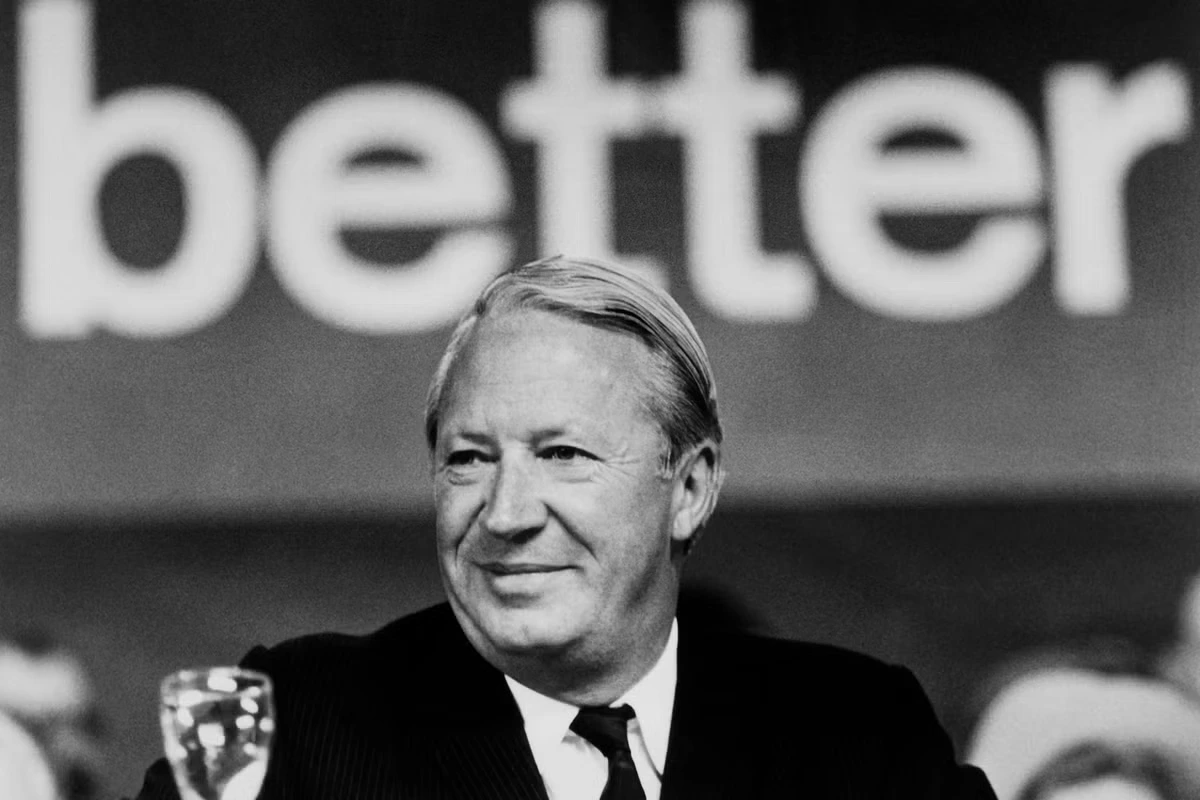
So when Ted Heath, then the Conservative leader of the opposition, and the most dedicated adherent to the European cause in British history, approached the 1970 general election, he found a formula and a framework for entry that would satisfy, as far as possible, his own followers, a sceptical public and his European counterparts, with whom he would have to get acceptable terms of entry.
The words in the 1970 Tory manifesto – “A Better Tomorrow” – are so expertly crafted that they should be lifted by Burnham for the Labour manifesto in 2029:
“If we can negotiate the right terms, we believe that it would be in the long-term interest of the British people for Britain to join the European Economic Community, and that it would make a major contribution to both the prosperity and the security of our country. The opportunities are immense. Economic growth and a higher standard of living would result from having a larger market.
“But we must also recognise the obstacles. Obviously, there is a price we would not be prepared to pay. Only when we negotiate will it be possible to determine whether the balance is a fair one, and in the interests of Britain.
“Our sole commitment is to negotiate – no more, no less. As the negotiations proceed, we will report regularly through Parliament to the country.
“A Conservative government would not be prepared to recommend to Parliament, nor would Members of Parliament approve, a settlement which was unequal or unfair.”
There it is – “oven ready”, if you like, for Burnham, his own European mandate, tempered, as in 1970, by experience of failed talks, mutual misunderstandings and mistrust. History can and should repeat itself.
Getting the UK-European relationship right is nothing new. What Burnham should ask people for at the next election is for a commitment only to negotiate terms for a closer relationship with the EU in the interests of the British people – no more and no less.
The terms on which we can rejoin the EU’s institutions or the EU itself would obviously have to be acceptable to Burnham, and then endorsed by a majority of MPs in the new parliament. This is how it was done from 1970 to 1972, through sometimes fractious debates and tight margins in the Commons.
In the event, only with cross-party support – in those times, Labour was the more Eurosceptic party – did the original Treaty of Rome become incorporated into British law as the European Communities Act. It received royal assent on 17th October 1972, and took effect at the turn of the year. Around 60 years on, we could witness a very similar story for the re-run.
There’s a certain historical inevitability about it.