It’s a list that brings to mind the old Generation Game conveyor belt, as an enthusiastic voiceover rattles through the goods. “Luxury household items, two cars, designer kitchenware, a £400 gold pendant, multiple pairs of shoes, Mont Blanc pens, a £1,200 space telescope and the big prize, a £124,550 motorhome! Tell us, Mr Murrell, what will your wife say when you return with these amazing items?”
“Nothing. She won’t notice.”
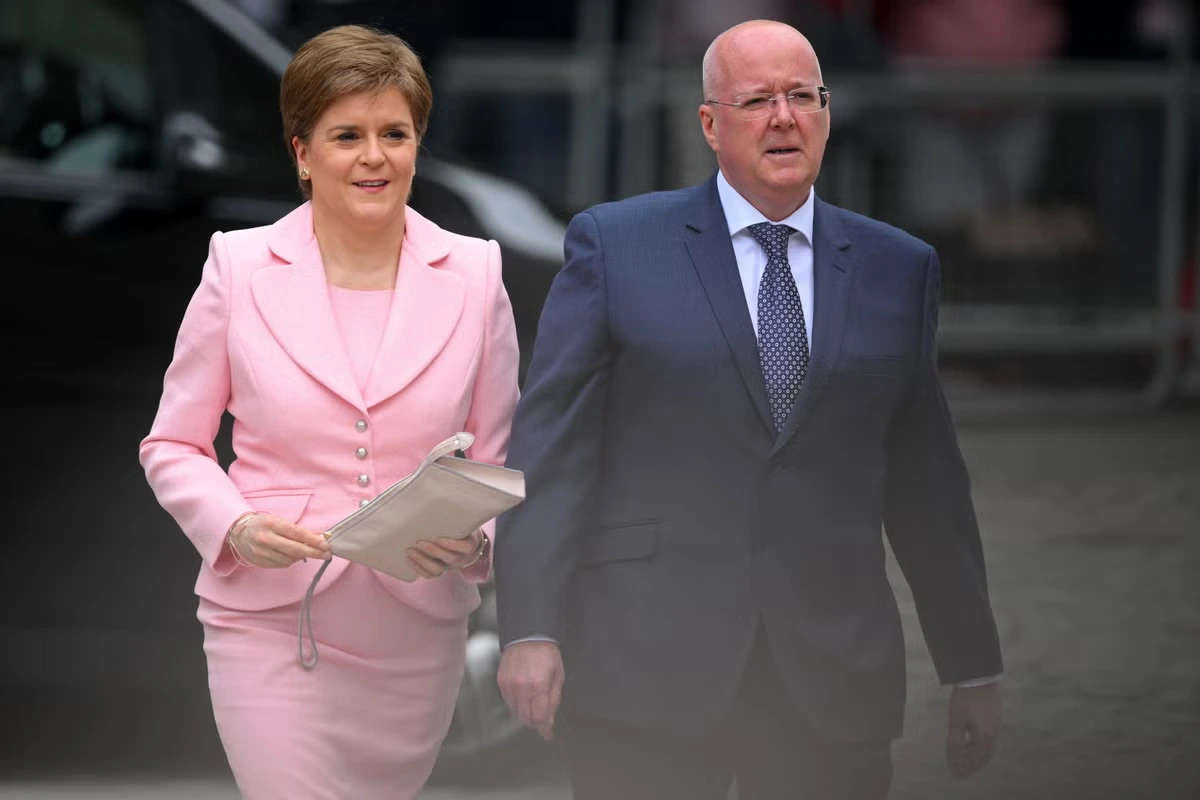
Such is the baffling claim at the heart of Nicola Sturgeon’s now-failed marriage. The ex-first minister of Scotland stepped down in 2023, swiftly followed by her husband of 20 years, Peter Murrell. He resigned as the longstanding chief executive of the SNP after making erroneous claims about membership numbers. Innocent enough – until serious allegations emerged that over £400k of party campaign funds had somehow been “rerouted”. In July 2021, a police investigation was opened – though Sturgeon, high on her Covid-management triumph – breezily claimed she was “not concerned”.
Unfortunately, it turns out the call was coming from inside the house. This week, Murrell was remanded in custody at the Edinburgh High Court after pleading guilty to embezzling £400,310.65 from the SNP between 2010 and 2022. Speaking on the radio, ex-party MP Joanna Cherry noted a “remarkable lack of curiosity” on Sturgeon’s part.
I too noted this, as last week, my hifi-obsessed husband invested in a fancy amplifier. My first question was “how much?” (Answer: Quite a lot). Second question: “How did you afford that?” I believe this is normal in a marriage. You make individual purchases – see my many clothes – but you do give your partner a vague idea of what you’re spending, and where the money is coming from.
By contrast, not sharing financial information is a flapping red flag – unless you’re Nicola, apparently. We can only conclude that either she believed she was married to a footballer, she was too high-minded to notice household goods, or she simply assumed they had loads of spare money and never queried the bonanza. It’s also possible they simply weren’t close, and their marriage had drifted, or as some claim, was one of political convenience – more Charlotte and Mr Collins than Cathy and Heathcliff.
For most of us, though, the idea of not knowing what our spouse is up to financially is unthinkable. Whether we have one pot, separate accounts and joint bills, or individual bank accounts, unless you’re a billionaire, it’s hard to imagine one’s partner ordering a stream of luxury items and not stopping to wonder what that racehorse is doing in the lounge.
People who have affairs regularly get caught out by unexplained spending (£85 at Toddington Travelodge? £450 on some Monica Vinader jewellery?), and until it became unaffordable to run a knackered Ford Fiesta, the key sign of a midlife crisis was “splashing out” on a scarlet sports car, or in my friend’s case, a motorbike to drive across Europe. I think we’d all notice if a motorhome had been splashed out on, even just to enquire where it would take us on our holidays that year. In short, money and marriage go together like a horse and carriage.
My husband and I have separate accounts, we just ping each other money for bills and shopping, depending on who’s more skint that week. We buy the things we need individually. I’m not overseeing his sock-replacement budget. But the key is, we trust each other – and any bigger purchases require agreement, or, at the very least, a conversation.
“Separate bank accounts don’t automatically signal a lack of trust; for many couples, they provide a sense of autonomy and reduce day-to-day conflict around spending,” says Dr Kirstie Fleetwood-Meade, Chartered Counselling Psychologist, (drkirstie.co.uk). “What matters most is transparency, communication and being on the same page about your spending, saving and any financial goals,” she adds. “Problems will inevitably arise when finances become secretive rather than separate.”
Nicola Sturgeon grew up working class, the daughter of a dental nurse and an electrician, and Murrell’s Edinburgh upbringing was reportedly far from lavish. You’d think finances might loom large in the lives of this couple from humble beginnings, where big spending tends to come with a need to be justified. Yet Sturgeon apparently took to politics and abandoned control of the personal purse strings altogether.
She and Murrell also had separate bank accounts, and she had “no access” to his finances. “In relation to many of the items…expensive watches and games consoles, I was not aware of them having been purchased at all,” she said, explaining that they were both “earning high salaries” and “I had no reason to doubt that he had used his own money”.
Yet, says UKCP psychotherapist Sumeet Grover, “The healthiest way for a couple to approach money is through openness, transparency and ongoing communication.” Nevertheless, she acknowledges that sometimes, “conversations about money can evoke shame, anxiety or fear of judgement in both people”.
Understanding your partner’s history with money is the key to opening a discussion, Grover adds. “How easy or difficult were finances for them growing up? What emotional meaning do they attach to money? Does money mean freedom and possibility or is it tied to emotional security and survival?”
In a long-term relationship, it’s natural to discuss larger purchases – particularly when it comes to buying property or setting long-term financial goals.
“What does raise concerns is when one partner attempts to control the other person’s access to finances, restricts their financial independence, or makes unauthorised financial transactions using the other person’s money,” adds Grover.
It’s particularly bad if they’re making unauthorised financial transactions with embezzled funds. “In relation to the…campervan, I was not aware of its existence until it featured in the police investigation,” Sturgeon insisted, “nor was it parked in our driveway”. It was, in fact, parked in the driveway belonging to Murrell’s elderly mother, who apparently also demonstrated a remarkable lack of curiosity.
It’s all so absurd, it raises the question – did he do it not due to greed, but resentment? Sure, everyone likes a Mont Blanc pen and new shoes, but the sheer scale of the splurges, with packages winging in from those symbols of aristocratic wealth, Harrods and Fortnum & Mason, suggests there was more going on psychologically than Murrell thinking, “I fancy a £1,200 telescope.”
“For some people, shopping or spending can become a distraction from profoundly difficult emotions that feel too painful, shameful or overwhelming to speak about directly,” explains Sumeet Grover.
“Excessive spending can also be linked to low self-worth, loneliness, or a deeper sense of emotional dissatisfaction,” she says. “Constantly buying new things may temporarily give a person a sense of control while helping them deny or avoid painful feelings.”
But although we may rage-spend, we don’t generally steal. Clearly, the SNP, not Peter, was Sturgeon’s great passion. Perhaps it’s not a huge stretch to imagine he chose to siphon funds directly from the “significant other” in their relationship – and that her enormous success and popularity in Scotland drove his embittered, criminal decisions.
“Spending may unconsciously function as a form of passive aggression towards a partner,” confirms Grover, “particularly where there is envy, anger or emotional disconnection.”
So yes, separate accounts are healthy in a marriage – but it only works if you completely trust each other, your spouse lacks access to hundreds of thousands of party money – and you don’t happen to suffer from a remarkable lack of curiosity. It’s just a shame he didn’t order a Generation Game cuddly toy. It could be of some comfort in a jail cell.